


Summer Sun Safety Month: Protecting Your Feet from Florida’s Rays

August is Summer Sun Safety Month, and here in Sarasota, the sun is part of our everyday life—sometimes in ways we don’t think about until it’s too late. While most people are good about applying sunscreen to their faces, arms, and legs, the feet are one of the most neglected areas when it comes to sun protection.
At West Coast Podiatry Center, we see firsthand the effects of sun damage on feet—from mild burns to more serious conditions like skin cancers. This month is the perfect time to raise awareness and share tips to keep your feet safe, healthy, and ready for Florida living.
Why Feet Are Especially Vulnerable
Your feet have unique characteristics that make them particularly susceptible to sun damage:
-
They’re often overlooked. People remember sunscreen for the nose but forget the tops of their feet, toes, and ankles.
-
High sun exposure in Florida. Whether it’s walking the beach, boating, or wearing sandals daily, your feet can rack up hours of UV exposure.
-
Thin, sensitive skin. The tops of the feet have delicate skin that can burn quickly, and burns in this area are especially painful due to constant movement and friction from shoes.
Sunburn Isn’t the Only Risk
While most people associate UV damage with short-term pain or peeling, the long-term effects can be far more serious:
-
Premature aging: Chronic sun exposure can cause thinning, wrinkling, and discoloration of the skin.
-
Persistent skin changes: Sunspots, scaly patches, or discoloration on the feet may be early signs of precancerous changes.
-
Skin cancers: Melanoma, the deadliest form of skin cancer, can develop anywhere on the foot—even under toenails or on the soles. Squamous cell carcinoma and basal cell carcinoma are also possible.
Early Warning Signs to Watch For
Regular self-checks of your feet are vital. Contact a podiatrist promptly if you notice:
-
A mole or spot that changes in size, shape, or color
-
Persistent sores that don’t heal
-
Dark streaks under the toenails
-
Rough, scaly patches that bleed or crust over
-
New growths or bumps on the skin of your feet or toes
Melanoma on the feet is often diagnosed later than melanoma elsewhere on the body—partly because people don’t think to check. Early detection is key to successful treatment.
Smart Sun Safety for Feet
Protecting your feet from UV damage isn’t complicated, but it does require building good habits:
1. Use Sunscreen—Properly
-
Apply a broad-spectrum SPF 30 or higher to the tops of your feet, between your toes, and around your ankles.
-
Reapply every two hours when outdoors, and after swimming or sweating.
-
Don’t forget the back of your heels if you’re wearing slingback sandals.
2. Choose Protective Footwear
-
Wear shoes that cover the tops of your feet during peak UV hours (10 a.m. to 4 p.m.).
-
If you prefer sandals, pick styles with wider straps to reduce exposed skin.
3. Moisturize After Sun Exposure
-
Use a gentle, fragrance-free moisturizer to keep the skin soft and reduce peeling or cracking.
-
Look for formulas containing aloe vera or hyaluronic acid to help restore hydration.
4. Schedule Regular Skin Checks
-
Include your feet in monthly self-exams.
-
Have your podiatrist or dermatologist examine suspicious areas, especially if you have a history of skin cancer or excessive sun exposure.
Special Considerations for Sarasota Lifestyles
Florida living brings unique scenarios that can quietly damage your feet:
-
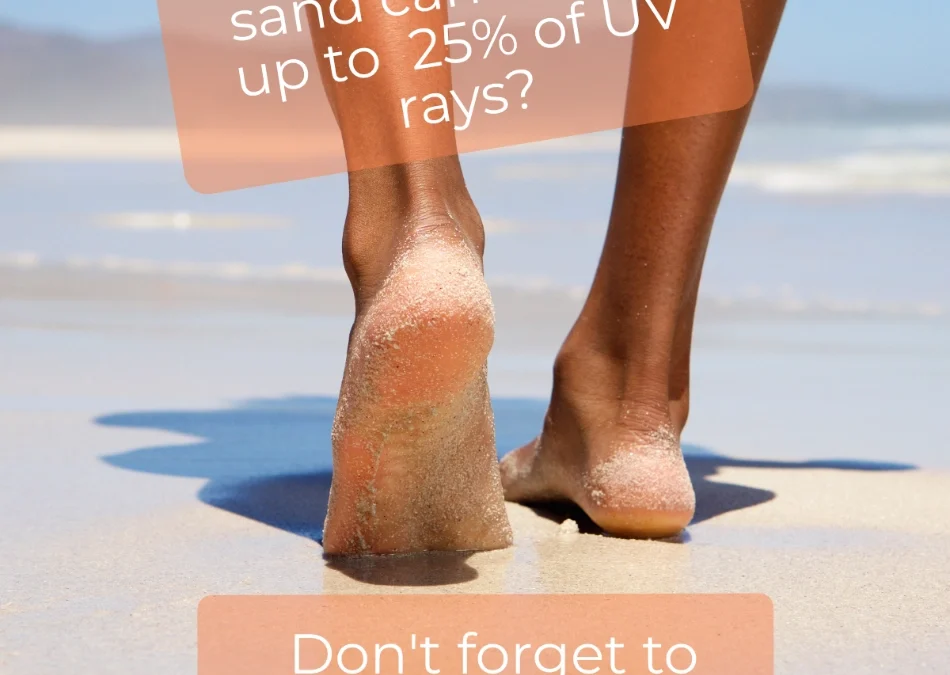
Beach days: Sand reflects up to 25% of UV rays, meaning you get double the exposure—both direct and reflected.
-
Boating & fishing: The combination of reflective water and open footwear can cause severe burns in just a couple of hours.
-
Golf & outdoor sports: Even short games or matches can lead to cumulative sun damage if your feet are unprotected.
When to See a Podiatrist
Come in for an evaluation if you notice:
-
Sunburn that causes blistering or swelling
-
Chronic dry or cracked skin after sun exposure
-
Any skin lesion, mole, or streak under the nail that’s changing in appearance
-
Persistent pain or tenderness on the top of the foot after sunburn
Our podiatrists can assess whether your symptoms are a normal healing response or something requiring further testing or treatment.
West Coast Podiatry’s Role in Sun Safety
At West Coast Podiatry Center, we don’t just treat injuries and conditions—we help prevent them. For sun-related concerns, we:
-
Provide skin cancer screenings for the feet
-
Treat sunburn complications, including blister care and infection prevention
-
Educate patients on proper skin and nail protection for Florida’s climate
We’re here to keep your feet safe in every season, but summer sun protection is one of the easiest ways to prevent future problems.
Final Takeaway
Your feet carry you through every summer adventure—so don’t let the sun take a toll on them. By making sunscreen, smart footwear, and regular skin checks part of your routine, you can enjoy Sarasota’s sunshine without sacrificing your foot health.
This Summer Sun Safety Month, take a moment to give your feet the same care and protection you give the rest of your body. Your future self will thank you.
Call West Coast Podiatry Center today to schedule your comprehensive foot and skin check, and step into the rest of summer with confidence and comfort.